

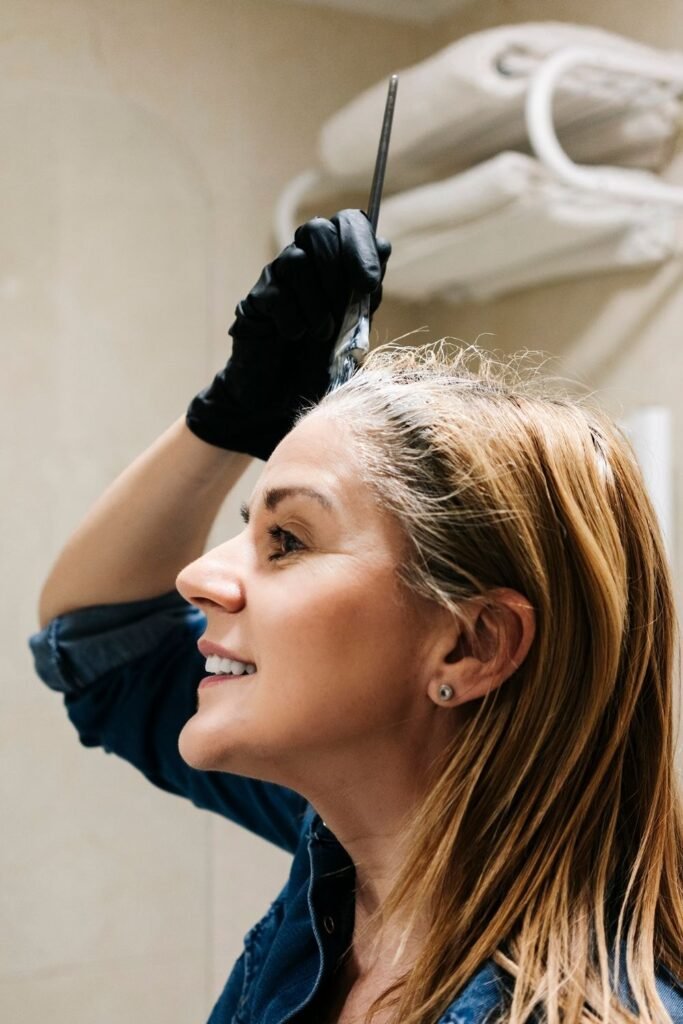
You have watched the videos. Someone goes from brunette to butter blonde in one afternoon, shakes out their hair, and looks delighted. What the video cuts before showing you is the part three weeks later, when the ends feel like dry grass and a stylist is quietly reaching for the scissors. Almost every home blonde disaster starts with the same decision, which is trying to lift five shades in one sitting with a developer far too strong for the job.
This guide covers how to go blonde without damage on virgin hair, meaning hair that has never been colored, permed, or relaxed. You will lift 2 to 3 shades. That is a real, visible change. Dark brown lands at warm caramel. Medium brown lands at bronze blonde. Light brown lands at soft honey. What it is not is platinum. Nobody gets platinum out of dark brown in one home session with their hair still attached, and any guide that tells you otherwise is selling something.
The method here is slow on purpose. You will use 20 volume developer instead of 30, test one hidden strand before touching the rest, save your roots for last, and finish with a bond builder. Set aside 3 hours on lift day, plus a patch test 48 hours before. Read the whole thing once, then start.
What You Need
- Powder lightener with a blue or violet base
- 20 volume developer (one 16 oz bottle)
- Plastic or glass mixing bowl
- 2 inch tint brush
- Two pairs of gloves
- Four sectioning clips
- Rat tail comb
- Kitchen scale (optional but helpful)
- Violet based toner plus 10 volume developer
- Bond building treatment
- Purple shampoo
- Deep conditioner
- Petroleum jelly for your hairline
- Old dark towel and a T-shirt you hate
- Hand mirror plus a wall mirror
- Phone timer
Buy the toner at the same time as the lightener. Bleached hair without toner is orange, and the shop will be closed.
At a Glance
- Find your starting level
- Stop washing two days out
- Buy 20 volume developer
- Patch test 48 hours ahead
- Strand test for real timing
- Set up your station
- Section into four quadrants
- Mix to a thick yogurt texture
- Paint mid-lengths and ends
- Apply to roots last
- Check a strand every 10 minutes
- Rinse cool and shampoo twice
- Tone out the brass
- Seal with a bond builder
Find your starting level before you buy anything
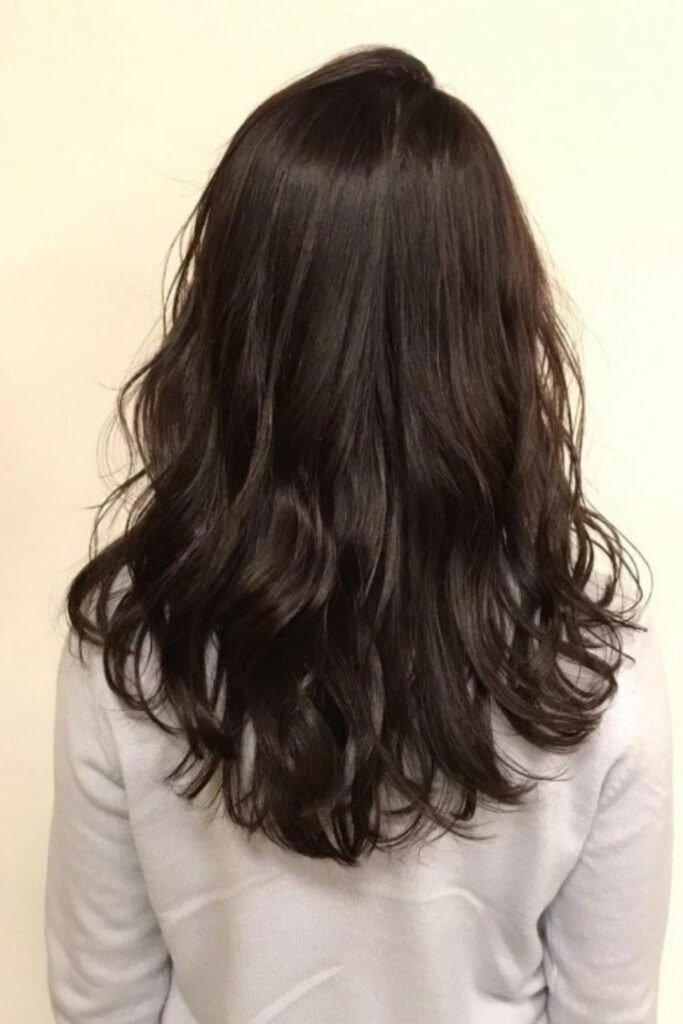
Hair color is measured on a scale of 1 to 10, where 1 is black and 10 is the palest blonde. Take a small section to a window in daylight, hold it against a sheet of white paper, and compare it to a level chart on your phone. Most people guess one to two levels lighter than they actually are, which is exactly how the wrong developer ends up in the cart. Check your ends separately from your roots. Sun exposure often leaves ends a full level lighter, and they will lift faster later.
Stop washing your hair two days before lift day
Natural scalp oil sits between the bleach and your skin, which is the whole reason stylists ask about your last wash. Give it a full 48 hours. Skip dry shampoo during those two days, since the powder blocks the lightener in patches and leaves you with uneven roots. No oils, no leave-in, no serum either. Slightly greasy hair is the goal here.
Buy 20 volume developer, not 30 or 40
Strength is where beginners go wrong at the shop. A 20 volume developer lifts around 2 levels and works slowly enough that you can watch it happen and stop when you want. A 30 or 40 volume lifts faster, swells the hair shaft more, and runs hot against your scalp, which is how people end up with chemical burns and stretchy wet strands. The extra speed buys you nothing except less control. Pick a powder lightener with a blue or violet base too, because it cancels some orange while it works.
Never mix bleach with anything containing ammonia, bathroom cleaner, or another brand’s activator to make it stronger. It does not work faster, it releases fumes you should not breathe, and it can burn your scalp. One brand of lightener, one bottle of 20 volume developer, nothing else in the bowl.
Patch test 48 hours before you plan to lighten
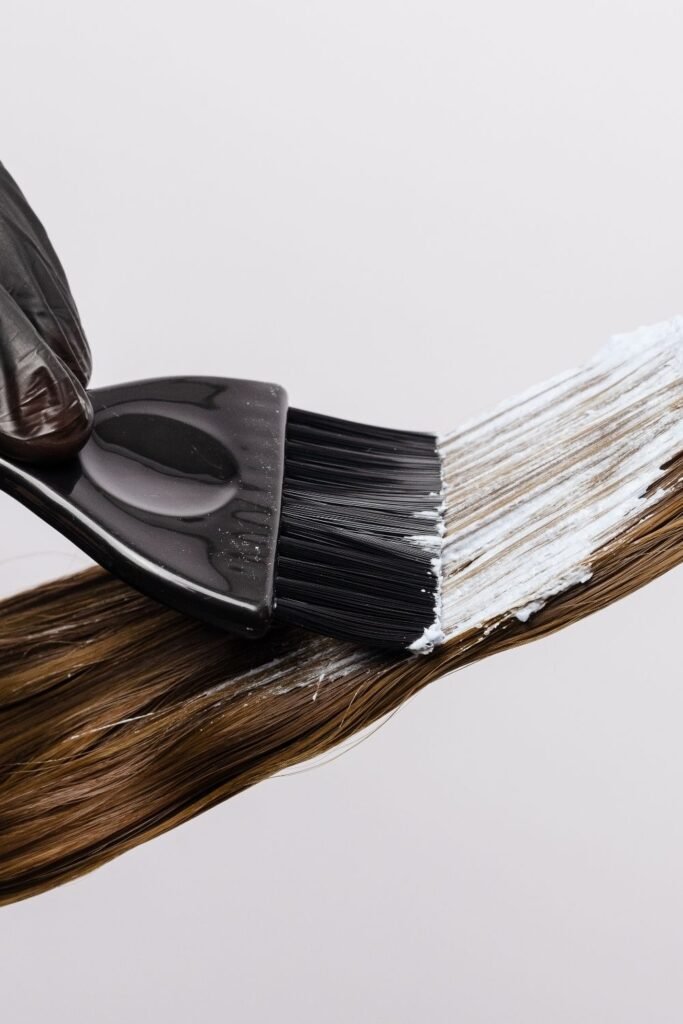
If you have never had bleach on your skin, you have no idea yet whether you react to it. Mix a pea sized amount of lightener and developer. Dab it behind your ear or on your inner elbow. Leave it 45 minutes, rinse, then wait a full 48 hours and look at the spot. Redness, itching, swelling, or a raised bump means stop. That reaction on a coin sized patch becomes your whole scalp on lift day.
Strand test one hidden piece to learn your real timing
Fifteen minutes of testing replaces every guess you would otherwise make. Snip or lift a small section from underneath, near your nape where nothing shows. Coat it, start a timer, and wipe a little off with a paper towel every 5 minutes to watch the color change. Write down the time it hits pale yellow. That number is your processing time, not the one printed on the box, because the box does not know your hair. Virgin hair often lifts slower than expected, so do not panic if it takes 35 minutes.
Photograph your test strand next to a white paper towel every time you wipe it. Bathroom light lies about warmth, and a photo lets you compare the real shift between checks. If the strand stalls at orange for two checks in a row, that is your hair telling you it lifts to caramel today and no further.
Set up your station so nothing is out of reach
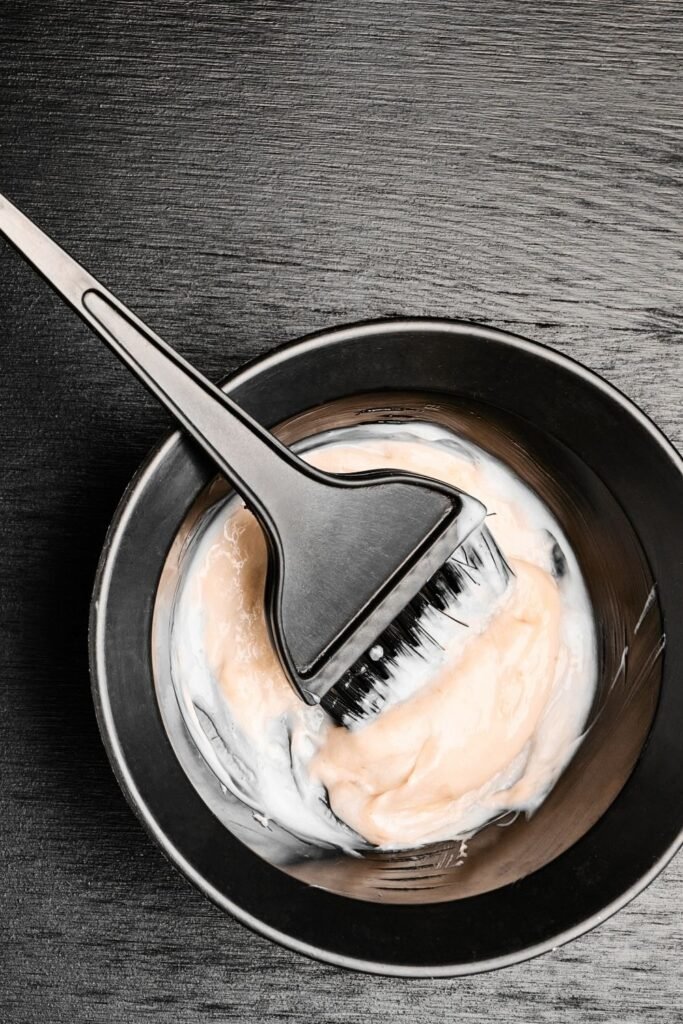
Once bleach is on your hair, the clock runs and your gloves are covered. Walking to a cupboard mid-application means dripping lightener across the floor and losing minutes you cannot get back. Lay out five things on a towel beside the sink first:
- Mixing bowl, tint brush, and rat tail comb
- Four sectioning clips, already opened
- Petroleum jelly and a spare pair of gloves
- Phone with the timer app already open
- Paper towels and a hand mirror
Put the toner and bond builder in the shower now too.
Split dry, unbrushed hair into four sections
Brushing right before bleach roughs up the cuticle and gives the lightener more places to grab unevenly. Use the pointed end of your rat tail comb instead. Draw one line straight down the middle from your forehead to your nape, then a second line ear to ear across the top of your head. That gives you four quadrants. Twist each one and clip it flat against your scalp. Coat your hairline, ears, and the back of your neck with petroleum jelly before you touch the bowl.
Mix the bleach to a thick yogurt consistency
Ratio first, texture second. Most powder lighteners want 1 part powder to 2 parts developer, so check your packet and weigh it if you own a scale. Stir with the flat side of your tint brush until no dry lumps remain. The mixture should mound slightly on the brush and hold its shape rather than running off. Runny bleach drips onto skin and processes unevenly. If yours pours like cream, add a little more powder and stir again. Mix only what you will use in the next 20 minutes, since it starts losing strength once it is combined.
Paint the mid-lengths and ends first
Your scalp puts out heat, and heat speeds up bleach. Roots left to last catch up with hair that has been processing far longer, which is why this order exists and why reversing it gives you a bright band at the top and dull ends. Unclip your first back quadrant. Take a half inch slice, lay it flat, and paint from about 2 inches below the root all the way down. Work slice by slice through all four sections, back first, face last. Saturate fully. Patchy coverage shows up as stripes.
Work the back of your head before the front, always. The back is the hardest area to reach and the easiest to miss, and if you start there your arms are still fresh. Use the hand mirror to check the nape before you move on, because that section is the one people discover unbleached in the shower.
Apply bleach to your roots last
Go back to your first quadrant now. Paint the 2 inch strip you skipped, working through all four sections in the same order as before. Move faster here than you did on the lengths, since scalp heat is already lifting this section for you. Aim to finish the whole root area in 10 minutes or less so the timing stays even across your head.
Do not use a hair dryer, a heat cap, or a hot shower to speed things along. Added heat lifts the root band far past everything else and raises the risk of a scalp burn. If your scalp starts to sting, itch sharply, or feel hot rather than tingly, rinse everything out immediately. Bleach left on a burning scalp does not become a better color.
Check a strand every 10 minutes until it turns pale yellow
Your strand test gave you a target time, so set the timer for 10 minutes less than that and start checking early. Wipe a small amount of bleach off one back strand with a paper towel. Look at the color underneath in daylight if you can. You are watching it move from red to orange to yellow to pale yellow, and pale yellow is where you stop. Never leave lightener on longer than 50 minutes total, even if you are not there yet.
Rinse with cool water and shampoo twice
Twenty minutes of careful work gets undone by a hot rinse, so keep the water cool to lukewarm the whole time. Rinse until the water runs completely clear with no white residue at your roots. Then shampoo twice with a gentle sulfate free formula, because leftover lightener keeps working quietly after you leave the shower. Squeeze the water out with a towel instead of rubbing. Wet bleached hair stretches and snaps, so skip the brush entirely and use a wide tooth comb if you need to detangle.
Tone the brass out with a violet based toner
Orange or brassy yellow in the mirror right now is normal, and it is not your finished color. Wait until hair is towel damp, then mix your toner with 10 volume developer at the ratio on the box. Violet cancels yellow. Blue cancels orange. Comb it through from ends to roots so it spreads evenly. Watch it closely and rinse at 10 to 20 minutes, checking every few minutes, since toner grabs fast and can turn hair grey or lavender if you forget about it.
Tone in stages rather than all at once. Rinse at 10 minutes, look at the color dry or nearly dry, and reapply for another few minutes if it still reads warm. Pulling toner early is fixable in ten minutes. Leaving it on too long means waiting for it to fade, which takes weeks.
Rebuild the bonds so you go blonde without damage
Conditioner and bond builders are not the same product, and swapping one for the other is where the plan falls apart. A bond treatment repairs the internal links the lightener broke. Conditioner coats the outside so hair feels soft while staying fragile underneath. Apply the bond treatment to clean damp hair, leave it the full 10 minutes the packet asks for, then rinse and follow with your deep conditioner. Repeat the bond treatment once a week for the next month.
Air dry today. Your hair has done enough.
Frequently Asked Questions
These are the questions that come up after the first mirror check, once the color is already on and the panic or the curiosity sets in. Five cover almost everything a first timer asks.
How long should I wait before lifting again?
Four weeks at minimum, and six is safer on virgin hair that has just been lightened. The cuticle needs time to settle, and a second lift too soon is where breakage starts.
Can I go blonde without damage if my hair is already dry?
Dry is workable, damaged is not. Do a stretch test on a wet strand first. If it stretches and does not spring back, book a salon consultation instead of lightening at home.
Does coconut oil the night before really protect my hair?
It helps a little on the lengths, but it also blocks the lightener in patches and leaves you with uneven color. Natural scalp oil is enough. Put that effort into the bond treatment afterward instead.
When can I wash my hair after bleaching?
Wait 48 to 72 hours so the toner settles and the cuticle closes. After that, wash two or three times a week at most, and use purple shampoo once a week to hold the tone.
Should I cut my hair before or after going blonde?
After, and give it about a week. Bleach reveals split ends you did not know were there, so trimming afterward means you cut the right amount instead of guessing.
You Did It
Look at your ends in daylight. That shift from where you started is real, and you got there without frying a single strand, which is the whole point of learning how to go blonde without damage rather than chasing platinum in one afternoon.
Give your hair four weeks before you think about lifting again. Bond treatment once a week, purple shampoo once a week, air dry when you can.
Save this pin so it is waiting for you on your next lift day, and share it with the friend who is one click away from buying 40 volume.
